Alek Westover
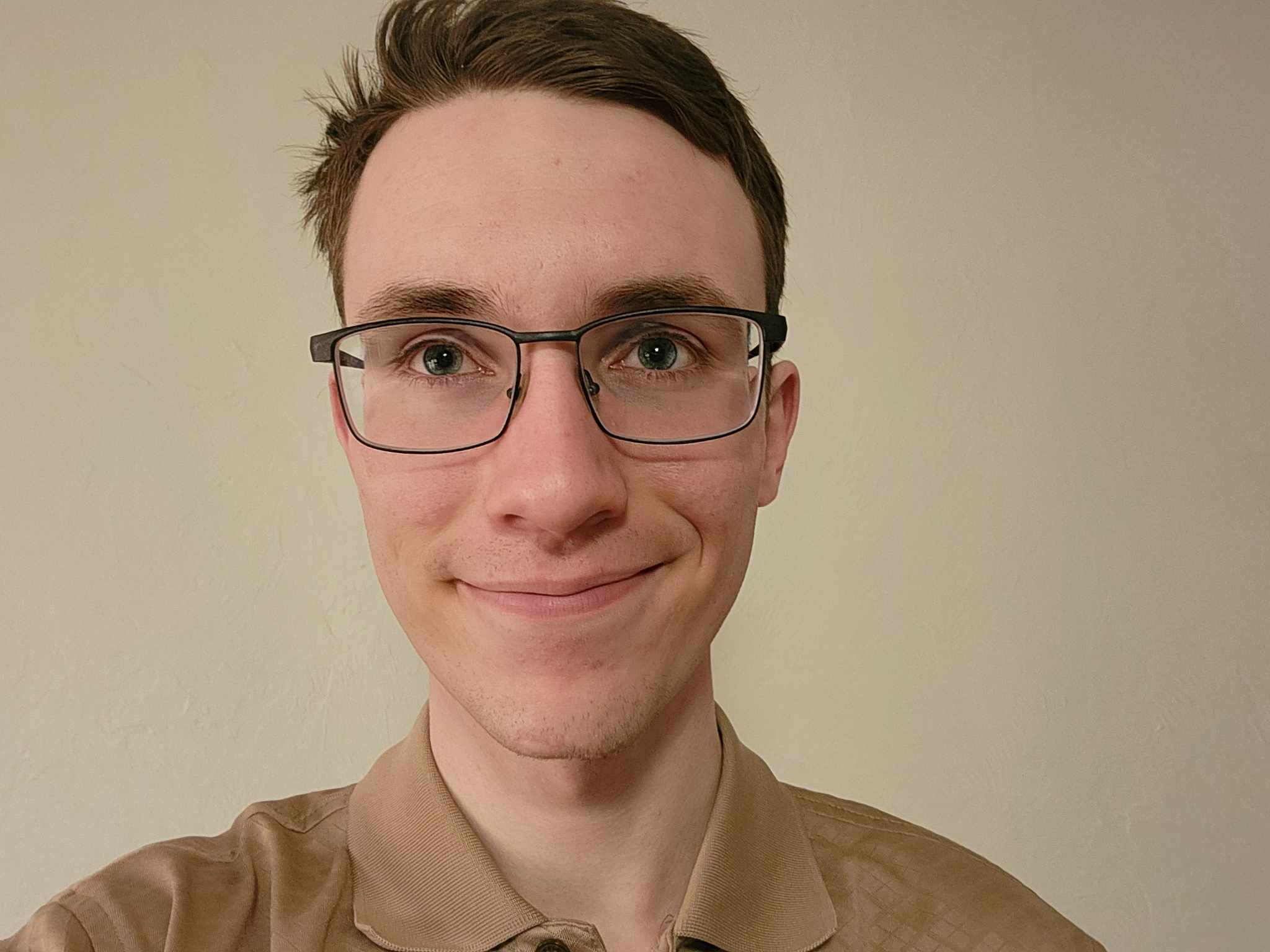
Right now I'm working on AI safety at Redwood Research.
Before joining Redwood I did theoretical computer science research at MIT
(data structures, online algorithms, and algorithmic graph theory).
Contact
Email: alek dot westover at gmail dot com
Blog
I occasionally put unpolished thoughts about life (and sometimes math) on my blog here.
I write about AI safety on LessWrong.
LessWrong Posts
- [Paper] Distillation for Incrimination and Distillation for Capabilities
- Research Note: Filtering Subversion-Relevant Information From Pretraining Data Is Feasible
- Latent reasoning architectures would likely undermine CoT, our strongest oversight tool
- Deep recurrent models are less robustly CoT-monitorable than normal CoT models in a toy setting
- Astra is much better at reasoning with filler tokens than previous models
- An operationalization of opaque serial depth
- Proposal for tracking the effects of architecture on monitorability
- The distillation double bind: Distilling misaligned models either transfers misalignment or it doesn't
- Advice for making robust-to-training model organisms
- Why does off-model SFT degrade capabilities?
- Incriminating misaligned AI models via distillation
- Sleeper Agent Backdoor Results Are Messy
- How do LLMs generalize when we do training that is intuitively compatible with two off-distribution behaviors?
- Model organisms researchers should check whether high LRs defeat their model organisms
- Should AI Developers Remove Discussion of AI Misalignment from AI Training Data?
- What training data should developers filter to reduce risk from misaligned AI? An initial narrow proposal
- What is (and isn’t) gained by avoiding architectures with high opaque serial depth?
- Malign initializations are more robust when the model can think better in the reasoning language than in the output language
- A list of existing alignment approaches
- How to reduce capability degradation from off-model SFT
- An Empirical Study of Methods for SFTing Opaque Reasoning Models
- Five approaches to evaluating training-based control measures
- How will we do SFT on models with opaque reasoning?
- Three visions for diffuse control
- Theoretical predictions on the sample efficiency of training policies and activation monitors
- Four Downsides of Training Policies Online
- Methodological considerations in making malign initializations for control research
- Notes on Software-Based Compute-Usage Verification
- Why I think AI will go poorly for humanity
- Safe Distillation With a Powerful Untrusted AI
Publications
-
"Distillation for Incrimination and Distillation for Capabilities"
Sebastian Prasanna, Jacqueline Tay, Alek Westover -
"Lower Bounds for Linear Hashing via Arithmetic Kakeya"
Ainesh Bakshi, Alex Conway, Hanna Komlós, William Kuszmaul, Alek Westover -
"Listing 6-Cycles in Sparse Graphs" (ITCS'25)
Virginia Vassilevska Williams, Alek Westover -
"The Diamond Test: A Novel Direct Sum / Affinity Test" (ITCS'25)
Alek Westover, Edward Yu, Kai Zheng -
"When to Give Up on a Parallel Implementation" (ITCS'25)
Nathan S. Sheffield, Alek Westover -
"Interrater Reliability Estimation via Maximum Likelihood for Gwet’s Chance Agreement Model." (OJoS'24)
Westover, Alek M., Tara M. Westover, and M. Brandon Westover. -
“A Nearly Quadratic Improvement for Memory Reallocation” (SPAA'24) (Slides)
Martin Farach-Colton, William Kuszmaul, Nathan Sheffield, and Alek Westover -
“Scheduling Jobs with Work-Inefficient Parallel Solutions” (SPAA'24) (Slides)
William Kuszmaul and Alek Westover -
“Complexity of Multiple-Hamiltonicity in Graphs of Bounded Degree”
Brian Liu, Nathan S. Sheffield, Alek Westover -
“On the Relationship Between Several Variants of the Linear Hashing Conjecture”
Alek Westover -
“The Variable-Processor Cup Game” (ITCS'21) (Slides)
William Kuszmaul and Alek Westover -
“Cache-Efficient Parallel-Partition Algorithms using Exclusive-Read-and-Write Memory” (SPAA'20) (Animation) (GitHub)
William Kuszmaul and Alek Westover